
 Blog details


Cloud Database Management Best Practices are essential in today’s data-driven world, where databases are at the heart of every application, website, and business operation.
With the right strategy and support from experts like iSky9 – businesses can optimize database operations, reduce downtime, and build a reliable foundation for future growth. In this article, we’ll explore the best practices for managing cloud databases successfully.
What Is Cloud Database Management?
Cloud Database Management refers to the ongoing administration, monitoring, optimization, and maintenance of databases hosted in cloud environments. It involves managing database performance, security, backups, updates, and scalability while ensuring applications remain available and responsive.
Modern organizations often use databases such as MySQL, PostgreSQL, MongoDB, Redis, and SQL Server to support critical workloads.
At iSky9, cloud database management services are designed to help businesses manage critical databases across AWS, Google Cloud, and hybrid environments with proactive monitoring, optimization, and support.
Prioritize Continuous Database Monitoring
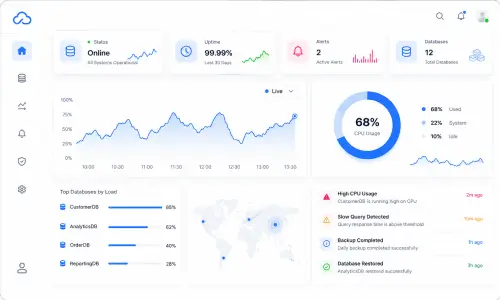
One of the most important aspects of cloud database management is maintaining visibility into database health and performance. Many performance issues develop gradually and may go unnoticed until they begin affecting users.Database monitoring services provide real-time insights into resource utilization, query execution times, storage consumption, connection activity, and replication health. By continuously monitoring these metrics, organizations can identify bottlenecks early and take corrective action before they impact business operations.
Focus on Database Performance Optimization
Application performance is directly tied to database efficiency. Even the most powerful cloud infrastructure can struggle if databases are not properly optimized.Database performance optimization involves regularly analyzing workloads, reviewing query execution plans, and identifying inefficient operations.Organizations should establish a routine process for reviewing database performance and implementing improvements. Small optimizations can significantly enhance application speed, improve user experiences, and reduce operational expenses over time.
Strengthen Security at Every Layer
Database security should never be treated as an afterthought. Modern databases contain valuable customer information, financial records, intellectual property, and operational data that must be protected from unauthorized access.A strong security framework should include:
- Data encryption both at rest and in transit
- Role-based access controls
- Multi-factor authentication
- Network segmentation
- Regular security audits
- Continuous vulnerability assessments

Cloud providers offer powerful security tools, but organizations remain responsible for implementing proper controls and following security best practices.
Implement Reliable Backup and Recovery Strategies
Data loss can have severe consequences for any organization. Hardware failures, software bugs, accidental deletions, ransomware attacks, and human errors can all result in critical data becoming unavailable.Database backup and recovery planning should be a core component of every cloud strategy. Businesses should implement automated backup schedules and regularly test recovery procedures to ensure data can be restored quickly when needed.A comprehensive backup strategy typically includes:
- Automated daily backups
- Point-in-time recovery capabilities
- Geographically redundant storage
- Routine backup validation
- Disaster recovery testing
The goal is not simply to create backups but to ensure the organization can recover efficiently during unexpected events.
Design for High Availability
Downtime affects revenue, customer trust, and operational efficiency. As businesses become increasingly dependent on digital services, maintaining database availability has become a top priority.High availability architectures help minimize service interruptions by distributing workloads across multiple systems and regions. Features such as database replication, failover mechanisms, and load balancing allow organizations to maintain service continuity even when infrastructure components fail.
Plan for Future Scalability
Many businesses initially deploy databases based on current needs without considering future growth. However, application usage, customer demand, and data volumes can increase rapidly.Cloud database management should include a clear scalability strategy that supports both short-term and long-term growth. Organizations must evaluate whether their databases can handle increased workloads without sacrificing performance or reliability.Scalability planning may involve:
- Vertical resource scaling
- Read replicas
- Database partitioning
- Workload distribution
- Multi-region deployments
Proactive planning helps organizations avoid costly migrations and performance issues as business requirements evolve.
Embrace Automation
Managing databases manually becomes increasingly difficult as environments grow. Routine administrative tasks consume valuable time and increase the risk of human error.Database automation allows organizations to streamline operational processes while improving consistency and reliability. Tasks such as backups, software updates, performance monitoring, resource provisioning, and security patching can often be automated.
Leverage Multi-Cloud Database Management
Many modern organizations operate across multiple cloud platforms. While this approach offers flexibility and reduces vendor dependency, it can also introduce management challenges.Multi-cloud database management enables businesses to maintain consistent security policies, monitoring standards, and operational procedures across different cloud providers. It also improves disaster recovery capabilities and provides greater flexibility when scaling workloads.
Conduct Regular Database Health Checks
Even well-managed databases require periodic evaluations to ensure they continue operating efficiently. Regular database health checks help identify performance issues, configuration problems, security gaps, and resource constraints before they become serious concerns. A thorough database assessment typically reviews:
- Query efficiency
- Index performance
- Resource utilization
- Backup integrity
- Security configurations
- Replication status
Routine evaluations provide valuable insights that support ongoing optimization and infrastructure planning.

How iSky9 Helps Businesses Manage Cloud Databases

Whether you’re running MySQL, PostgreSQL, MongoDB, Redis, or SQL Server, iSky9 provides comprehensive cloud database management services tailored to your business needs.
From performance optimization and database monitoring to security management and disaster recovery planning, iSky9 helps organizations maintain reliable, scalable, and secure database environments that support long-term growth.
Conclusion
Cloud database management is essential for maintaining performance, security, and scalability in today’s data-driven business environment. By implementing best practices such as proactive monitoring, performance optimization, automated backups, and robust security measures, organizations can reduce downtime and support long-term growth.
Ready to optimize your database infrastructure? iSky9’s cloud database experts can help you improve performance, strengthen security, and build a scalable database environment tailored to your business needs. Contact iSky9 today to discover how our managed database solutions can support your growth journey.