
 Blog details


Digital transformation is no longer a future goal – it’s a business necessity. Organizations across every industry are embracing cloud technologies to improve agility, strengthen security, reduce infrastructure costs, and support long-term growth.
At iSky9, we’ve helped businesses design, migrate, and manage cloud environments across leading platforms, including AWS, Microsoft Azure, Google Cloud, Huawei Cloud, and Tencent Cloud.
This guide explains what cloud computing services are, why businesses are rapidly adopting them, and how choosing the right cloud partner can help your organization stay competitive in today’s digital economy.
What Are Cloud Computing Services?
Cloud computing services provide on-demand access to computing resources over the internet instead of relying on traditional on-premises infrastructure. These resources include virtual machines, storage, networking, databases, security solutions, backup services, analytics platforms, and application hosting.
Cloud platforms also allow companies to deploy new applications in minutes instead of weeks, giving development teams greater flexibility while helping organizations respond quickly to changing customer demands.
Why Businesses Are Moving to the Cloud
| Business growth depends on speed, reliability, and the ability to adapt to change. Traditional infrastructure often creates limitations that slow innovation, increase operational costs, and require significant capital investment. |  |
Cloud computing solves many of these challenges by providing infrastructure that can expand or shrink according to business needs. Instead of planning hardware purchases years in advance, organizations can instantly increase computing resources whenever demand grows.
This flexibility has made cloud technology an essential part of digital transformation initiatives worldwide. Businesses can launch applications faster, improve customer experiences, enable remote collaboration, and support global operations without investing in physical data centers.
Key Benefits of Cloud Computing Services
Lower Infrastructure Costs
One of the primary reasons businesses invest in cloud computing services is cost optimization.
Traditional infrastructure often requires purchasing hardware based on future growth estimates. As a result, many organizations pay for servers and storage that remain underutilized for long periods.
At iSky9, cost optimization doesn’t stop after migration. We continuously monitor cloud environments, identify unused resources, recommend rightsizing opportunities, and implement best practices that help clients maximize their return on investment.Stronger Security and Compliance
Security remains one of the most important considerations when moving business workloads to the cloud.
Leading cloud providers invest heavily in cybersecurity technologies, compliance certifications, encryption, and infrastructure protection.
A well-designed cloud environment includes:- Identity and Access Management (IAM)
- Multi-Factor Authentication (MFA)
- Data encryption
- Network security controls
- Continuous monitoring
- Automated backups
- Disaster recovery planning
At iSky9, security is integrated into every cloud solution we deliver. From infrastructure design to ongoing management, our team follows industry best practices to help businesses protect sensitive data while maintaining regulatory compliance.
Scalability That Grows with Your Business
Business growth should never be limited by infrastructure. Whether you’re launching a new digital product, expanding into new markets, or experiencing seasonal traffic spikes, cloud platforms make it possible to scale resources automatically.
Instead of purchasing additional hardware months before it’s needed, organizations can instantly increase computing power, storage capacity, or networking resources as demand changes.Better Performance and Business Continuity
Customers expect applications to be available around the clock. Modern cloud infrastructure is designed with redundancy, high availability, and automated failover capabilities that reduce downtime and improve reliability.
Features such as load balancing, geographically distributed data centers, automated backups, and disaster recovery help organizations maintain business continuity even during unexpected outages.
Why a Multi-Cloud Strategy Makes Sense
Many organizations are moving beyond a single cloud provider and adopting multi-cloud environments to improve flexibility and reduce operational risk.
A multi-cloud strategy allows businesses to use different cloud providers for different workloads based on performance, pricing, compliance, or geographic requirements.
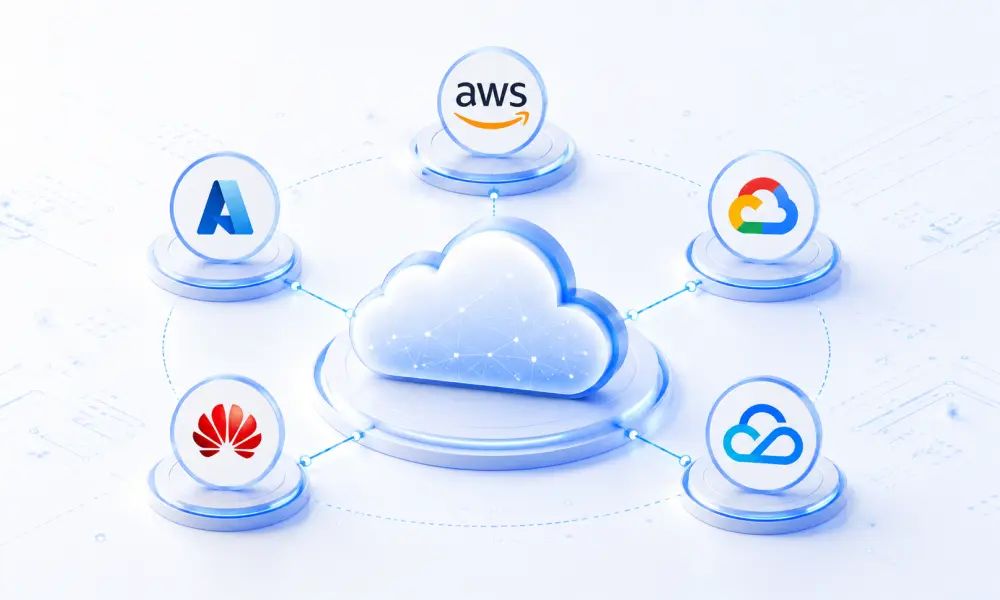
As a trusted multi-cloud partner, iSky9 helps businesses design and manage environments across AWS, Microsoft Azure, Google Cloud, Huawei Cloud, and Tencent Cloud. Our vendor-neutral approach ensures clients receive recommendations based on business requirements rather than platform preferences.
Cloud Migration: More Than Just Moving Servers
| Cloud migration is one of the most critical stages of digital transformation. While moving applications to the cloud may sound straightforward, successful migration requires detailed planning, technical expertise, and careful execution to minimize business disruption. |  |
- Assess Your Existing InfrastructureEvery migration begins with understanding the current environment. Existing applications, workloads, dependencies, security requirements, and performance expectations must all be evaluated before selecting the right migration strategy.
- Plan a Low-Risk MigrationSuccessful cloud migration is built on planning. Rather than migrating everything at once, businesses benefit from a phased approach that prioritizes critical workloads, minimizes downtime, and ensures continuity throughout the transition.
- Optimize After MigrationMigration isn’t the finish line. Once workloads are running in the cloud, continuous optimization helps improve performance, reduce operational costs, strengthen security, and ensure resources remain aligned with business growth.
Why Managed Cloud Services Matter
Cloud infrastructure evolves continuously. Applications grow, security threats change, workloads fluctuate, and new technologies emerge.
Without proactive management, businesses may experience rising cloud costs, declining performance, or security vulnerabilities.
Managed Cloud Services provide businesses with dedicated cloud experts who monitor infrastructure, optimize workloads, implement security best practices, manage backups, and resolve issues before they affect operations.
At iSky9, our Managed Cloud Services include:
- 24/7 infrastructure monitoring
- Performance optimization
- Cloud cost management
- Security management
- Backup and disaster recovery
- Technical support
- Infrastructure maintenance
This allows internal IT teams to focus on strategic initiatives while experienced cloud professionals handle day-to-day operations.
Why Businesses Choose iSky9
Choosing the right cloud partner is just as important as choosing the right cloud platform.
At iSky9, our approach combines technical expertise with a deep understanding of business challenges. We don’t simply deploy cloud infrastructure—we design solutions that improve performance, reduce operational costs, strengthen security, and support long-term growth.
- Certified Multi-Cloud Expertise: Our team works across leading cloud platforms, enabling businesses to choose the infrastructure that best aligns with their operational requirements and future goals.
- End-to-End Cloud Services: From cloud consulting and migration to compute hosting, managed services, cloud security, and infrastructure optimization, we provide complete lifecycle support.
- Long-Term Partnership: Technology continues to evolve, and so do business needs. We work alongside our clients to continuously optimize cloud environments, helping them adapt to changing demands while maintaining performance and cost efficiency.
Final Thoughts
Cloud computing has become the foundation of modern business operations. It enables organizations to innovate faster, improve resilience, strengthen security, and scale efficiently without the limitations of traditional infrastructure.
At iSky9, we help businesses build secure, scalable, and cost-effective cloud infrastructure tailored to their unique goals. Whether you’re planning your first migration, optimizing existing workloads, or looking for a trusted managed cloud partner, our team is ready to help you succeed.
Ready to modernize your IT infrastructure? Contact iSky9 today to discover how our cloud computing services can help your business reduce costs, improve performance, and scale with confidence.
Frequently Asked Questions
What are cloud computing services?
Cloud computing services provide businesses with on-demand access to computing resources such as servers, storage, networking, databases, and security over the internet without requiring physical infrastructure ownership.
How do cloud computing services reduce costs?
Cloud platforms eliminate large upfront hardware investments and allow businesses to pay only for the resources they use. Continuous optimization also helps reduce unnecessary cloud spending.
Which cloud platform is best for businesses?
The ideal platform depends on your workload, budget, compliance requirements, and growth strategy. Many organizations benefit from a multi-cloud approach that combines the strengths of different providers.
Why should businesses use Managed Cloud Services?
Managed Cloud Services help organizations improve security, optimize performance, reduce operational complexity, and control cloud costs through expert monitoring and ongoing infrastructure management.