
 Blog details

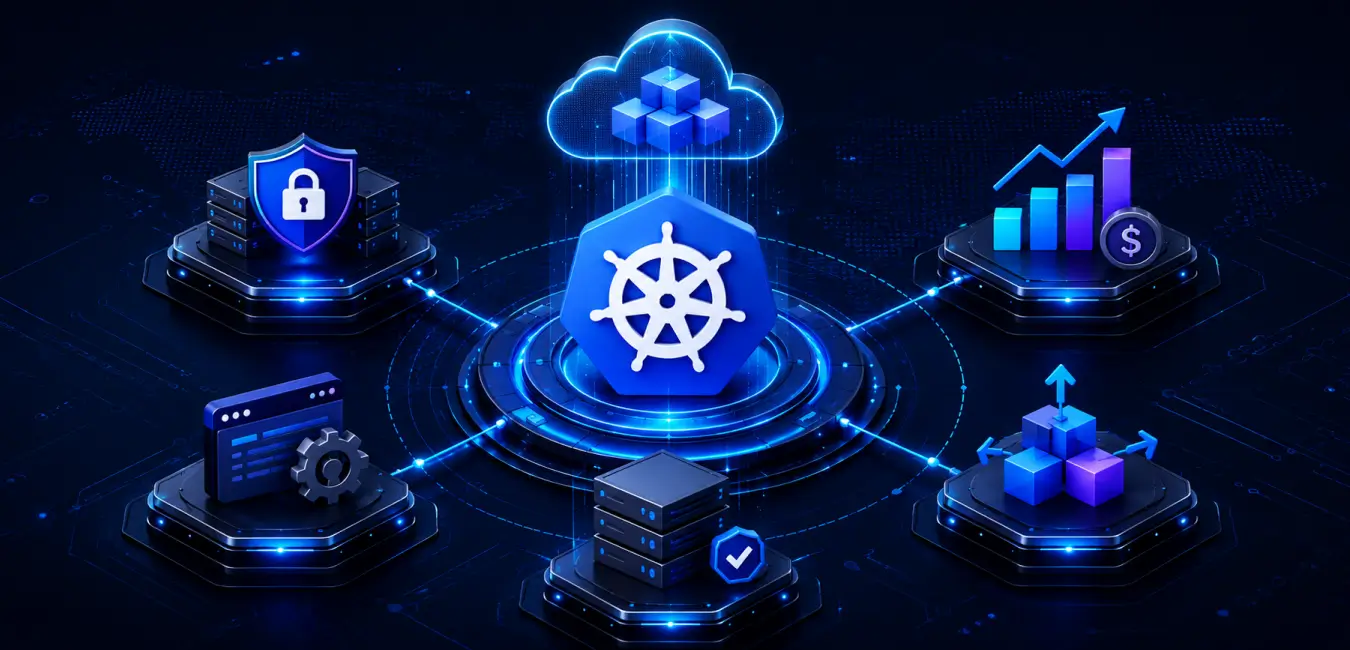
Kubernetes has become the leading platform for deploying and managing cloud-native applications. It helps businesses automate container orchestration, improve scalability, and deliver applications more efficiently. However, managing Kubernetes in a production environment is complex and requires expertise in security, monitoring, scaling, and infrastructure management.
Without the right resources, businesses can face operational challenges that impact performance, reliability, and costs. This is where Managed Kubernetes Services help by simplifying Kubernetes operations, strengthening security, and ensuring high availability.
In this blog, we’ll explore five common Kubernetes challenges and how Managed Kubernetes Services help businesses overcome them while improving scalability, performance, and operational efficiency.
What Are Managed Kubernetes Services?
| Managed Kubernetes Services provide end-to-end management of Kubernetes clusters, allowing businesses to deploy, manage, monitor, and scale containerized applications without handling the underlying infrastructure themselves. | 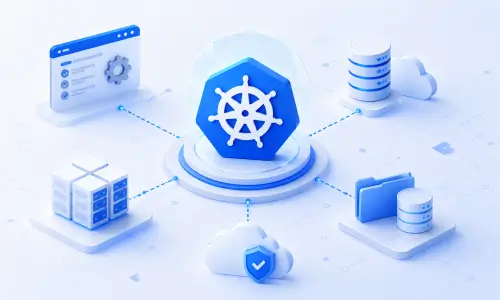 |
Instead of spending valuable engineering time maintaining Kubernetes environments, organizations partner with cloud experts who manage:
- Kubernetes cluster deployment
- Infrastructure provisioning
- Continuous monitoring
- Security management
- Cluster upgrades
- Backup and disaster recovery
- Performance optimization
- Cost optimization
- CI/CD integration
- Multi-cloud Kubernetes management
Leading cloud platforms such as Amazon Elastic Kubernetes Service (EKS) and Google Kubernetes Engine (GKE) provide managed Kubernetes platforms, while providers like iSky9 enhance these services with expert management, DevOps automation, security, observability, and ongoing operational support.
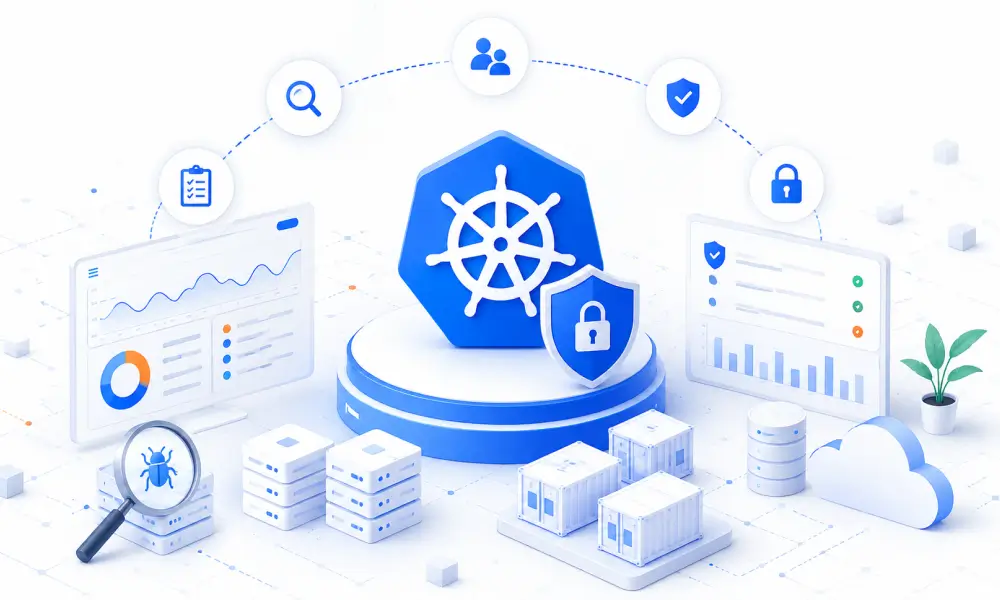
Why Kubernetes Management Is More Challenging Than It Looks
Kubernetes simplifies container orchestration, but managing a production-ready environment requires expertise in networking, security, storage, monitoring, automation, and cloud infrastructure. As applications scale, maintaining cluster performance, availability, and security becomes increasingly complex. Without dedicated Kubernetes specialists, businesses often face operational challenges that can impact performance, reliability, and costs. Let’s explore the five most common Kubernetes challenges and how Managed Kubernetes Services help overcome them.
Challenge 1: Kubernetes Complexity Increases Operational Overhead
Kubernetes simplifies container orchestration, but managing clusters, networking, storage, upgrades, and configurations can quickly become overwhelming. Without experienced Kubernetes engineers, businesses often face deployment issues, longer troubleshooting times, and increased operational overhead.
How Managed Kubernetes Services Help
Managed Kubernetes Services handle cluster provisioning, upgrades, monitoring, and day-to-day operations. This allows your internal teams to focus on application development instead of infrastructure management while ensuring a secure and stable Kubernetes environment.
Challenge 2: Scaling Applications Without Performance Issues
One of Kubernetes’ biggest advantages is its ability to scale applications based on demand. However, configuring autoscaling, load balancing, and resource allocation requires expertise. Without proper optimization, businesses may experience slow application performance, resource shortages, or unnecessary cloud costs caused by overprovisioning.
How Managed Kubernetes Services Help
Managed Kubernetes Services continuously monitor workloads and optimize cluster resources to ensure applications scale efficiently. Automated scaling and proactive performance management help maintain consistent application availability during traffic spikes.
Challenge 3: Security and Compliance Risks
Kubernetes environments contain multiple components that must be properly secured, including clusters, containers, networks, and user access. Misconfigured permissions, vulnerable container images, or exposed workloads can increase the risk of cyberattacks and compliance issues.
Maintaining a secure Kubernetes environment requires continuous monitoring, regular updates, and adherence to security best practices.
How Managed Kubernetes Services Help
Managed Kubernetes Services implement security best practices such as Role-Based Access Control (RBAC), vulnerability scanning, encryption, and continuous security monitoring. This helps protect applications while supporting compliance with industry standards.
Challenge 4: Limited Monitoring and Observability
Running Kubernetes without proper monitoring makes it difficult to identify performance issues before they impact users. Problems such as resource bottlenecks, failed deployments, or unhealthy pods can quickly affect application availability if they go unnoticed.
As Kubernetes environments grow, relying on manual monitoring becomes inefficient and increases the risk of downtime.
How Managed Kubernetes Services Help
Managed Kubernetes Services provide continuous monitoring and observability using industry-leading tools like Prometheus and Grafana. Real-time insights, automated alerts, and performance analytics help detect issues early, allowing teams to resolve them before they affect business operations.
Challenge 5: Rising Cloud Costs and Poor Resource Utilization
Many businesses adopt Kubernetes to improve scalability, but without proper resource management, cloud costs can quickly spiral. Overprovisioned resources, idle workloads, and inefficient scaling often lead to unnecessary spending while underutilized infrastructure reduces overall efficiency.
Controlling Kubernetes costs requires continuous monitoring and optimization.
How Managed Kubernetes Services Help
Managed Kubernetes Services optimize resource allocation, configure autoscaling, and continuously monitor workload performance to ensure businesses only pay for the resources they actually need. This improves both cost efficiency and application performance.
Why Managed Kubernetes Services Are a Smart Investment
Managing Kubernetes in-house requires significant expertise, ongoing maintenance, and dedicated operational resources. As environments grow more complex, businesses often spend more time managing infrastructure than delivering new features or improving customer experiences.
By partnering with a trusted Managed Kubernetes Services provider, organizations gain access to experienced cloud engineers, proven best practices, and automated management tools without the cost of building a large in-house Kubernetes team.
Why Choose iSky9 for Managed Kubernetes Services?
At iSky9, we help businesses build, manage, and optimize secure Kubernetes environments that support modern cloud-native applications. Our team combines deep cloud expertise with proven DevOps practices to deliver reliable, scalable, and cost-effective Kubernetes solutions.
Our Managed Kubernetes Services include:
- Managed Amazon EKS and Google Kubernetes Engine (GKE)
- Kubernetes cluster deployment and management
- CI/CD pipeline automation
- Continuous monitoring and observability
- Security hardening and compliance support
- Backup and disaster recovery
- Performance tuning and optimization
- Multi-cloud Kubernetes management
- Cost optimization and FinOps best practices
Whether you’re deploying your first Kubernetes cluster or modernizing an existing environment, iSky9 provides the expertise needed to ensure your infrastructure remains secure, resilient, and ready for growth.
Conclusion
| Kubernetes has transformed the way businesses deploy and manage applications, but its complexity can quickly become a challenge without the right expertise. From cluster management and security to monitoring, scaling, and cost optimization, maintaining a production-ready Kubernetes environment requires continuous attention. |  |
Managed Kubernetes Services eliminate these operational challenges by providing expert management, proactive monitoring, and ongoing optimization.
If your organization is planning to adopt Kubernetes or wants to improve an existing environment, partnering with an experienced provider like iSky9 can help you maximize performance, strengthen security, and reduce operational complexity.
Frequently Asked Questions
What are Managed Kubernetes Services?
Managed Kubernetes Services are professional solutions that handle the deployment, management, monitoring, security, and optimization of Kubernetes clusters, allowing businesses to focus on application development rather than infrastructure management.
Why do businesses need Managed Kubernetes Services?
They reduce operational complexity, improve security, optimize cloud costs, ensure high availability, and provide expert support for managing production Kubernetes environments.
Which cloud platforms support Managed Kubernetes?
Popular managed Kubernetes platforms include Amazon Elastic Kubernetes Service (EKS), Google Kubernetes Engine (GKE), and Microsoft Azure Kubernetes Service (AKS).
Can Managed Kubernetes Services improve cloud cost optimization?
Yes. Managed providers continuously monitor resource usage, implement autoscaling, and eliminate underutilized infrastructure to help reduce unnecessary cloud spending.
Is Kubernetes suitable for small and medium-sized businesses?
Absolutely. With the support of Managed Kubernetes Services, businesses of all sizes can deploy scalable, secure, and reliable containerized applications without the complexity of managing Kubernetes themselves.